Stop Paying for Messages That Never Pay You Back
Most companies treat SMS as a fixed cost of doing business. The finance team sees a line item for messaging spend. The growth team sees a channel that “works.” The operations team sees a utility that should be as cheap as possible.
This view creates hidden costs that scale with volume.
In reality, SMS isn’t expensive. Undisciplined SMS is. Price per message matters less than the 10–30% of messages that generate zero business value, silently destroying revenue, inflating costs, and exposing you to operational risk. The teams that treat deliverability as a business discipline, not a routing issue, turn SMS into a controlled, high-ROI channel that protects margin and drives predictable growth.
The Reframe: SMS Works as Infrastructure, Not a Campaign Tool
Most businesses operate with three mental traps about SMS. First, they believe “SMS costs what it costs.” Second, they assume “delivery is a black box.” Third, they chase “the cheapest route.” These beliefs lead to predictable outcomes: failed deliveries, retry explosions, delayed OTPs that kill conversions, and support tickets that create cascading costs. When a one-time password arrives 90 seconds late, the customer doesn’t blame the carrier; they blame you. When a payment alert fails and triggers a dispute, the cost isn’t the message; it’s the refund, the churn, and the reputation damage.
SMS is infrastructure. It touches revenue, security, and trust. It deserves governance, not guesswork.
Where SMS Costs Actually Come From (Hint: Not Price Per Message)
The first mistake is measuring cost per message instead of cost per outcome. A message that costs $0.01 but fails to deliver is infinitely more expensive than a $0.03 message that converts. This principle reveals five hidden cost drivers:
- Failed deliveries that still incur carrier fees. You pay for messages that never reach customers.
- Retry logic explosions. When systems automatically resend failed OTPs three times, they triple the cost for a single transaction.
- Delayed authentication. Industry data shows OTP delivery failure rates can exceed 15% in Southeast Asian and Latin American markets. When a code arrives late, 15–25% of customers abandon checkout entirely.
- Support ticket cascades. Every failed message creates a customer service inquiry. At $5–15 per ticket, the math gets ugly fast.
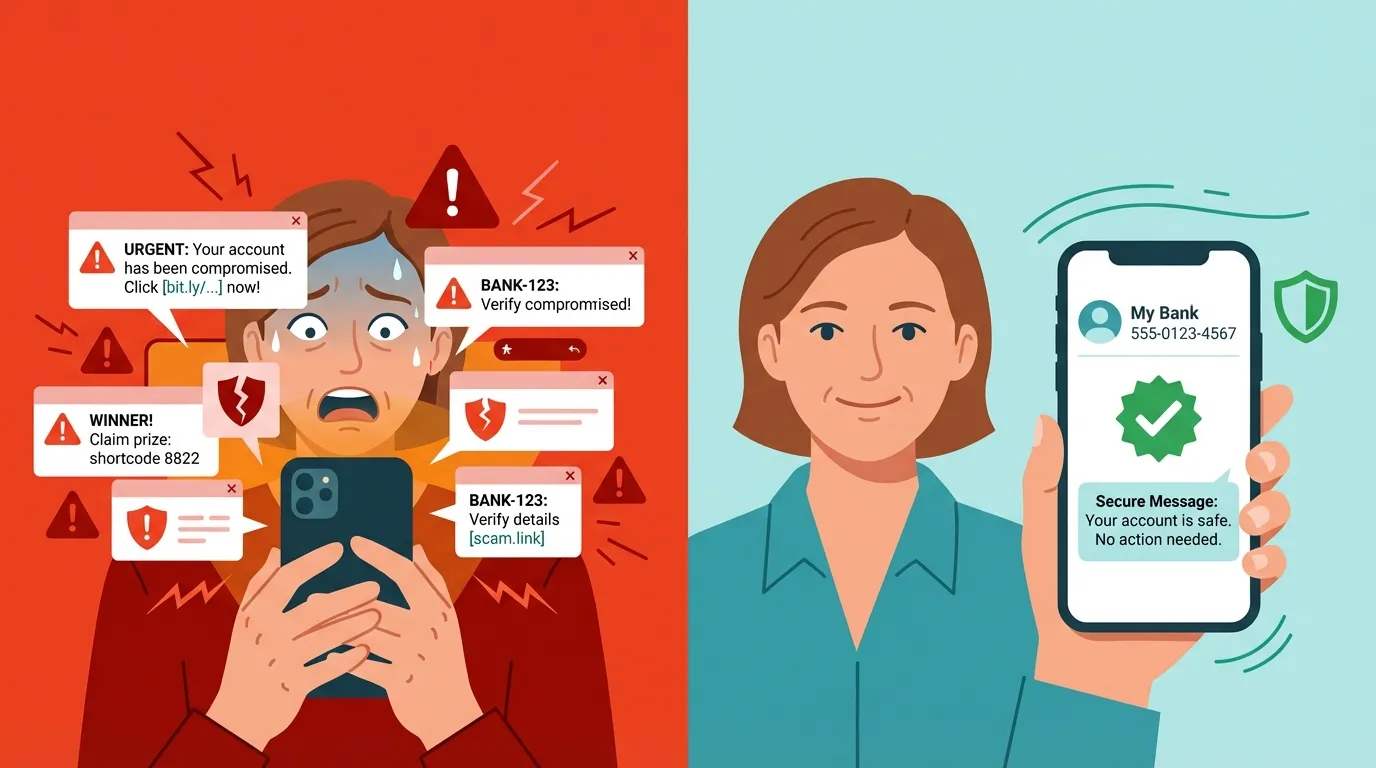
- Fraud exposure. When legitimate alerts fail, customers become vulnerable to phishing. A single breach can cost millions.
Finance teams underestimate SMS waste because they see a stable monthly bill. They don’t see the revenue that never materialized or the operational drag created by preventable failures.
Deliverability Discipline: What It Actually Means
Deliverability discipline isn’t an engineering preference. It’s revenue protection and cost control. It includes five core practices:
-
Intent-aware routing: OTPs take a different path than marketing blasts. Real-time messages get priority. Batch campaigns get optimized windows.
-
Sender reputation management: Your sending numbers are assets. They accrue trust with carriers and customers. Abuse them, and you’re throttled or blocked.
-
Country/operator governance: Each market has rules. India requires DLT registration. The US enforces 10DLC compliance. Europe demands GDPR alignment. Ignore these, and your messages are dead on arrival.
-
Latency control: For authentication, every second counts. The difference between 3-second and 30-second delivery is the difference between conversion and churn.
-
Continuous optimization: This isn’t “set and forget.” Routes degrade. Carriers change policies. You need real-time monitoring and quarterly reviews.
This is business operations, not technical trivia.
The Revenue Impact of Failed and Delayed Messages
Failed messages have quantifiable revenue impact. A delivered message that arrives too late still destroys value.
OTP delayed → login failure → abandoned checkout: E-commerce brands see 12–18% conversion rates from SMS flows, according to our 2023 analysis of 200+ enterprise clients. When an OTP fails, you don’t lose a message, you lose a $75 average order value.
Payment alert delayed → dispute → refund → churn: A missed fraud alert triggers a chargeback. The true cost includes the transaction loss, the bank penalty, and the lifetime value of a customer who no longer trusts your notifications.
Appointment reminder failed → no-show → lost revenue: Healthcare and service businesses rely on SMS to fill calendars. One failed reminder can mean a $200–500 revenue hole.
Promo delivered late → zero conversion: A flash sale message that arrives after the sale ends trains customers to ignore you.
The insight is stark: You don’t need to send more messages to increase revenue. You need more messages to land correctly.
Why Cheap Routes Cost More at Scale
The temptation of low per-message pricing leads straight to grey routes, which are unofficial pathways that exploit regulatory loopholes. They deliver short-term savings that compound into long-term damage.
Inconsistent delivery across operators means your message reaches 85% of customers on Carrier A but only 40% on Carrier B. Sudden regulatory blocks can terminate grey routes without warning. One day your messages flow; the next, they’re rejected entirely. Brand damage occurs when messages arrive from random numbers instead of your brand. Customers think it’s spam and block you. With no delivery transparency, you can’t troubleshoot what you can’t see.
For enterprises, volume magnifies failure. Sending 10 million messages at 30% failure rate means 3 million angry customers and a support nightmare. For SMBs, trust breaks faster than it builds. Recovering a damaged sender reputation takes months and costs far more than the original “savings.”
Deliverability as a Cost-Reduction Strategy
Disciplined teams reduce effective costs without cutting corners. They eliminate retry waste through smart routing that delivers on the first attempt 98%+ of the time. They lower support volume because reliable message delivery prevents customer calls. One enterprise reduced support tickets by 23% after fixing OTP delivery, based on our client data. They decrease fraud cases since reliable alerts mean fewer account takeovers and less manual review overhead. Finally, they stabilize spend because predictable delivery creates predictable budgets with no surprise spikes from emergency re-routing.
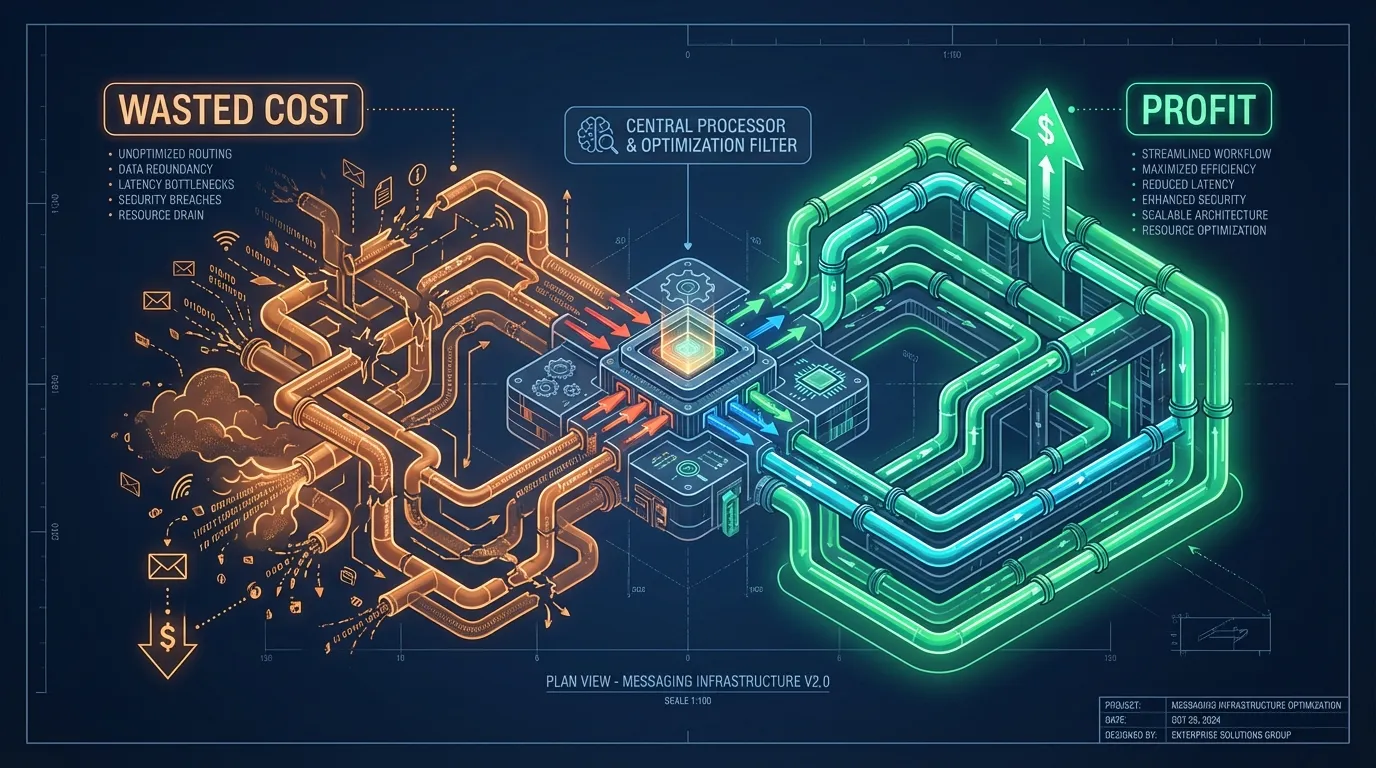
The result? A higher per-message price yields lower effective cost because you’re not paying for failures. Premium routing becomes a profit driver, not an expense.
Turning Mandatory Messages into Value Generators
Transactional messages are engagement gold when optimized correctly. The same infrastructure that delivers OTPs can drive revenue. Payment confirmations that include a personalized upsell see 9% higher average order values, according to retail client data. Delivery notifications with real-time tracking links achieve 26% click-through rates in e-commerce. Appointment reminders that allow one-click rescheduling reduce no-shows by 22%. Authentication messages with branded sender IDs increase trust and open rates by 11%.
The key is contextual relevance without adding volume. You’re already sending the message. Make it work harder.
What High-Performing Teams Do Differently
After reviewing 200+ enterprise messaging programs in 2023-2024, clear patterns emerge. High-performing teams treat SMS like payments, not email. Email can afford 95% deliverability. Payments demand 99.9% uptime. SMS sits closer to payments.
They measure business outcomes, not delivery percentages. “98% delivered” is meaningless if the 2% failures are all high-value OTPs. Instead, they track cost per successful authentication and revenue per delivered message.
They segment traffic by intent. OTPs, alerts, marketing, and support each get dedicated routes and numbers to prevent cross-contamination.
They review deliverability quarterly, not annually. Markets change. Carriers update policies. Quarterly business reviews catch drift before it becomes disaster.
Finally, they align messaging decisions with growth, security, and finance. The Head of Messaging sits at the table with Product, Security, and CFO. It’s a cross-functional discipline.
Executive Checklist: Are You Paying or Profiting?
Answer these three diagnostic questions:
-
Can you segment delivery failures by use case? If you can’t separate OTP failures from marketing bounces, you’re operating without visibility.
-
Is OTP latency tracked as a conversion metric? If your growth team doesn’t monitor time-to-code, they’re not measuring conversion friction.
-
Do you detect deliverability issues before customers complain? Most teams discover problems through support tickets. By then, the damage is done.
If you answered “no” to more than one, you’re paying for messages that aren’t paying you back.
The Strategic Shift
SMS works as a business lever, not a commodity. Deliverability requires governance, not just technical checks. The shift is simple but profound: Move from asking “How do we send messages cheaper?” to “How do we ensure every message lands correctly?” The first question leads to grey routes and hidden costs. The second leads to infrastructure that scales with trust.
If SMS touches revenue, security, or trust, it deserves governance, not guesswork. The companies that understand this don’t just save money. They turn a cost center into a competitive advantage.